The Power of a Presentation: Grade 8s show off their skills
- Guinevere Pura
- Feb 23, 2023
- 2 min read

Updated: Mar 22, 2023
Orientation to the Learners | Learning Outcome #4 | Observe and reflect on the impact of strategies and resources on learners
I've been an instructor for several years, and have done a number of presentations for large audiences in my time. From lectures to more than 100 people to intimate presentations to 30 guests. In my early days, to get over my nerves, I'd make sure I dressed to the nines, and had beautiful slides. But later on I learned that those elements were just icing on the cake. Flashy slides and looking good takes you so far, but telling a compelling story will capture your audience.
Two weeks ago, my grade 8 students worked in groups to present their project on the history of different geographical locations across Canada in the 1850s. This meets the expectations of Strand A. Creating Canada 1850-1890 in the Ontario Curriculum. It also demonstrates different skills they develop through this project. As a person looking in, I failed to realize how many skills that were involved in this research project and how much knowledge was acquired leading up to the final presentation. With this project alone the students demonstrated the understanding of historically significant events and how one historic event may be important for one community and not the other. Students needed to critically analyze new ideas and the importance of why these event are significant to certain groups and why. For example questions that arose were: how did the colonialist policies of the new Canadian government have an impact on First Nations, Métis, and Inuit individuals and communities?; or What impact did Clifford Sifton’s immigration policies and strategies have on Canadian heritage and identity? Students were able to have a deeper understanding on how these events in history can culturally shape one community's identity significantly and not as much as another.

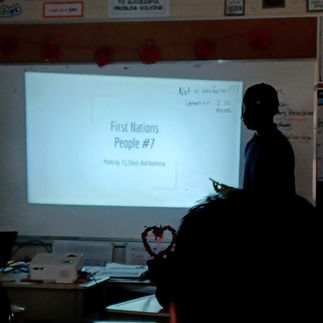


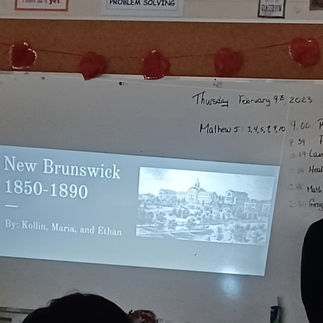
Some of the topics covers: First Nations People, Canada West, New Brunswick, Newfoundland and PEI (not all presentations were captured)
In addition, as a cross-curricular component where geography was introduced, students analyzed maps from the earlier part of the 19th century to the 1850s and how boundary lines, and names, on a map changed over time depending on who controlled what land. Given this information they gathered, they were able to further analyze the information to develop informed critical judgements based on their research.





Above: Teacher's and Teacher Candidate's comments
After all their research was gathered they finally had the opportunity to show off their presentation skills. This included using appropriate forms of communication - in this case of presentations they demonstrated their visual, written and oral communication skills. They also demonstrated their ability to condense their research into a concise presentation for their audience (their peers). This was a big challenge for many of them as their slides were covered with too much information - but they're getting there.
Overall, I was impressed with their abilities, and their hard work they put into their project. I had forgotten how much work it took and the skills they had to develop to get to this point.


Comments